
“Once upon a midnight dreary”…or similar thoughts along those lines, I find myself lying awake in the middle of the night, trying to wrap my brain around the implications of recent (and not so recent) trends developing in and around the monetizing of government (think Credit Mobilier, Teapot Dome, Lincoln Bedroom, “Clinton Cash”, Trump International Hotel), not the least of which might apply to our beloved broadcasting industry someday.
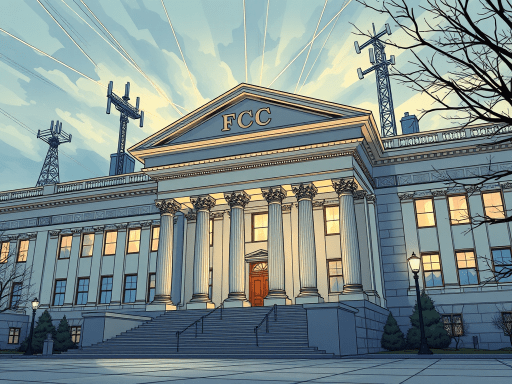
At an FCC monthly press conference, Chairman Brendan Carr suggested there could be a system in which broadcasters would be able to “buy out” or “bid to get out from under the public interest obligation” in exchange for something like a different kind of license (one with fewer regulatory constraints).
Now, this opens two big cans of worms: the first is that old nag: “public interest, convenience and necessity”. The second is a somewhat murkier trend of what is loosely referred to as “monetizing government and governmental services” or sometimes simply “pay to play”.
FCC Commissioner Brendan Carr has proposed a “novel” approach to broadcast regulation: allowing broadcasters to pay to opt out of their public interest obligations through a new auction system or some sort of “pay to play” scenario. Carr argues that the FCC has retreated from enforcing these obligations and suggests that broadcasters could either surrender their licenses or bid for a new type of license with fewer regulatory constraints. Why the FCC may have retreated from those obligations is beyond me, maybe there’s the real problem come wrapped in its solution.
Broadcasters would have a choice: stick with the existing license imposing the public interest obligations or pay (via auction or fee) to obtain a more “flexible use license”. This is a proposal, not a rule and Carr admits this is a fundamental change requiring Congressional approval.
Implications & Concerns:
• Transparency and consistency issues: If “public interest” obligations are loosely defined or partially optional, there’s a risk that regulation becomes arbitrary or used selectively (to target content one side dislikes, for example).
• Potential for inequality among broadcasters: Smaller/local broadcasters might not be able to afford to buy out obligations, putting them at disadvantage compared to large, well-funded companies.
• Effect on localism and community service: Public interest obligations often include local news, emergency alerts, or children’s programming. Weakening these could reduce such services.
• Risk of regulatory capture / political misuse: If the FCC defines obligations less strictly, or allows opting out for a fee, there might be political pressure or lobbying to loosen obligations in favorable ways.
• Impact on media pluralism and democracy: Because free/over-the-air broadcasters use a publicly owned resource (the public’s airwaves), there is a normative expectation that they provide certain public goods in exchange. Undermining that could erode aspects of public accountability or diversity of viewpoints.
Monetizing Governmental Beneficence:
The concept of monetizing government beneficence is as old as time. When public obligations become negotiable commodities, democracy slides toward corporate feudalism — where access to power becomes a private franchise, not a civic right. From $100,000 Lincoln Bedroom sleepovers to $2B sovereign wealth fund investments, the moral question remains: Who owns the government — the people, or those who can pay for it?
So, What’s With the Sovereign Wealth Fund (“SWF”) and What Could That Have to do With Broadcasting?
In the past few months, the Trump administration has proposed and/or executed several deals where the U.S. government receives a stake or share in the outcome—a marked shift from traditional U.S. economic policy, particularly in strategic sectors like semiconductors and critical minerals:
Intel: The U.S. government took a 10% stake in Intel using funds from the CHIPS and Science Act calling it a “down payment on a sovereign wealth fund.” [www.nbcnews.com]
MP Materials: The Pentagon became the largest shareholder (approximately 15%) in this rare earth mining company. [www.usnews.com]
Lithium Americas: The U.S. acquired a 5% stake in both the parent company and its Thacker Pass joint venture with GM. [www.usnews.com]
Trilogy Metals: A 10% stake was acquired, with warrants for an additional 7.5%, in a joint venture for critical minerals in Alaska. [www.usnews.com]
U.S. Steel: Trump conditioned the merger with Japan’s Nippon Steel on the U.S. receiving a “golden share”, giving him direct veto power over production and wage decisions. [www.cnbc.com]
Nvidia & AMD: Both companies reportedly agreed to give the U.S. government 15% of revenue from certain chip sales to China. [www.nbcnews.com]
Tik Tok: Trump is reportedly negotiating a “tremendous fee” for the U.S. government’s role in brokering a deal to spin off TikTok’s U.S. operations. This could result in a multibillion-dollar payment to the U.S. [MSNBC]
A U.S. Sovereign Wealth Fund:
Trump’s economic team has proposed the creation of a sovereign wealth fund—a government-owned investment fund—using these equity stakes as a foundation. This would mark a significant departure from traditional U.S. free-market principles. [www.nbcnews.com]
In February 2025, President Trump signed an executive order directing the Treasury and Commerce Departments to develop a plan for a U.S. sovereign wealth fund—a government-owned investment vehicle that would accomplish the following:
* Invest in strategic industries (e.g., semiconductors, energy, critical minerals)
* Generate long-term revenue for the U.S. government
* Reduce tax burdens on families and small businesses
* Promote U.S. economic and strategic leadership globally [www.whitehouse.gov]
The fund would be modeled after those in countries like Norway, Saudi Arabia, and Singapore, and would use federal assets (valued at over $5.7 trillion) to take equity stakes in companies or projects aligned with national interests. [www.whitehouse.gov]
The fund would:
* Monetize federal assets (e.g., land, mineral rights, strategic reserves)
* Take equity stakes in private companies (e.g., Intel, MP Materials)
* Negotiate revenue-sharing deals (e.g., with Nvidia, AMD)
* Possibly acquire or invest in foreign-owned platforms like TikTok [thehill.com]
Inquiring Minds Want to Know:
Will the SWF target media or telecom firms? If so, it could reshape the competitive landscape.
Will Congress approve the fund? Legal and constitutional challenges are likely, especially around spending authority and transparency. Will the SWF be used to influence public opinion? Critics warn of risks to media independence if the government becomes a stakeholder in content platforms. [carnegieendowment.org]
So, Your Point Is?
So, here’s where this long journey is headed: In our opinion, it’s a very, very slippery slope indeed to just trash the industry’s necessity to live up to its public interest obligations. Those obligations have been a bedrock tenet for decades. Admittedly, not ALL broadcasters live up to those lofty standards, but we choose to believe the great majority do at least pay more than lip service. To ratchet those standards back would, we believe, be a great disservice not only to the public but to the broadcasting ethos as well.
Be that as it may, and each and every broadcaster will have to look inward if not in the mirror, and question to what the degree he or she has tried to live up to the standards and expectations that go along with the trust that has been placed on them as stewards of the public’s airwaves.
If we do see some future day whereby there are auctions or “pay to play” opportunities whereby broadcasters are able to ignore those public service obligations AND if there is a future SWF where those funds do go, all we can hope for is the broadcasters that opt out will still have some sense of obligation to their communities to provide public service programming focusing on the issues facing their constituencies and perhaps there will be a little cash left lying around that will benefit broadcasters’ needs as well.
That’s 30 for now…for what it’s worth.

